|
 |
  |
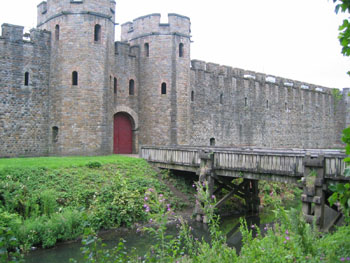
Castle Cardiff entryway. In 1776, the last Herbert heir, Charlotte Jane, passed the castle to her husband John Stuart, soon to become the Earl of Bute. The Butes were to have incredible impact on the development of Cardiff into the city we see today. Extensive modifications were made to the castle's interiors by various Bute earls, and the famous landscape artist "Capability" Brown was brought in to recreate the grounds. Fortunately, the Norman fortress remained little altered, although for a time the ditch was infilled with earth. The castle's ultimate fate was left to the whimsy of the 3rd Marquess of Bute, who assumed the title in 1848 and began the castle's rebirth in 1865. Hallmarked by the ornate Clock Tower, splendid in its own right but oftentimes downplayed as unauthentic, the exterior of the castle has been greatly redesigned to fit the fantasies of two remarkable 19th century medievalists: the 3rd Marquess of Bute, John Patrick Crichton-Stuart, and his whimsical architect, William Burges. Both men were highly talented dreamers who sought to recreate their visions of the Middle Ages in their own lifetimes, here in Cardiff, and also at the fanciful Castell Coch (we went there too).
|